Why a concert at Mirabell
The room where Mozart actually played
Most of Salzburg's Mozart evenings are named after him. This one is where he stood. The Marble Hall was the ceremonial hall of the prince-archbishops, and Leopold Mozart brought his prodigy children — Wolfgang and his sister Nannerl — to perform here for the court; Wolfgang's music for the university's ceremonies was premiered in this hall. A chamber concert at Mirabell is not a costumed re-enactment or a dinner show with music attached. It is the real thing, in the real room, and that authenticity is the whole point.
A hall by the architect of the Belvedere
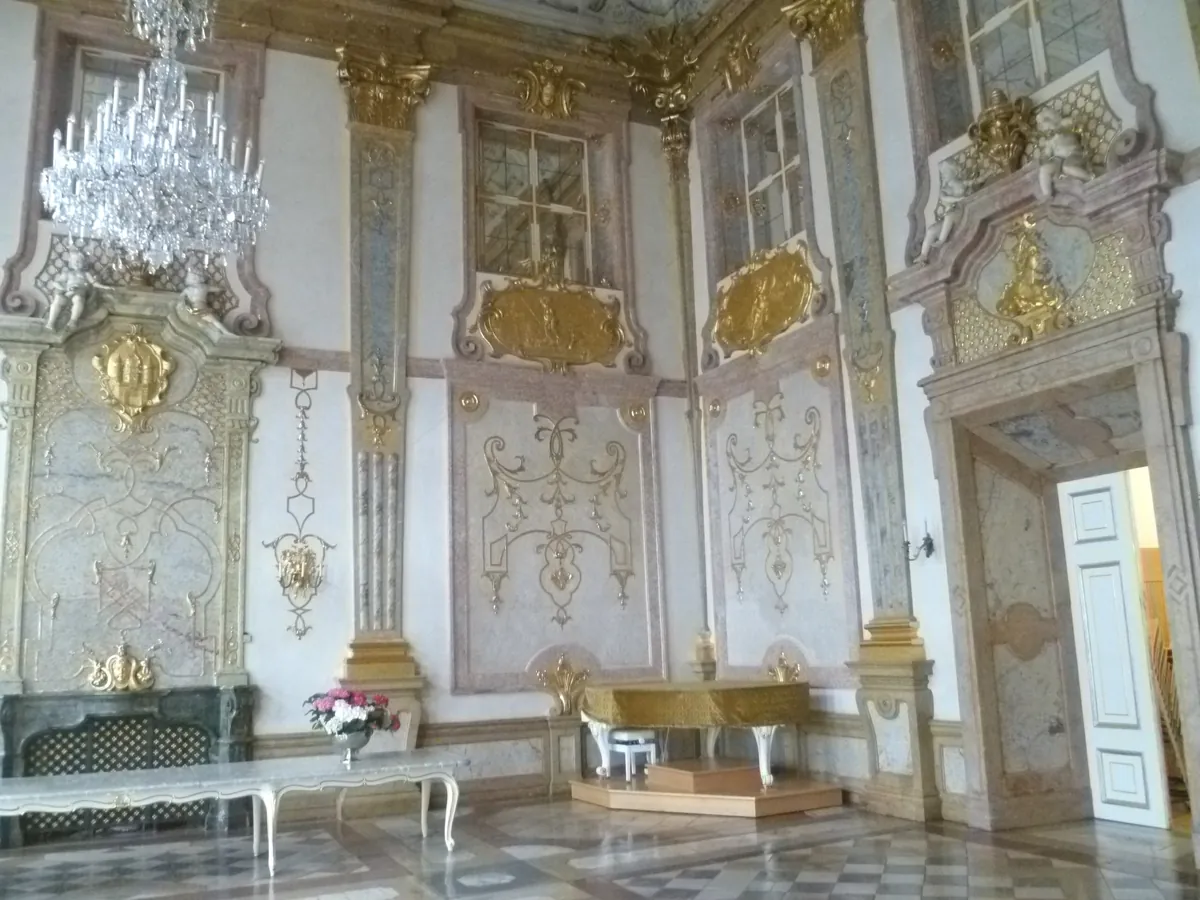
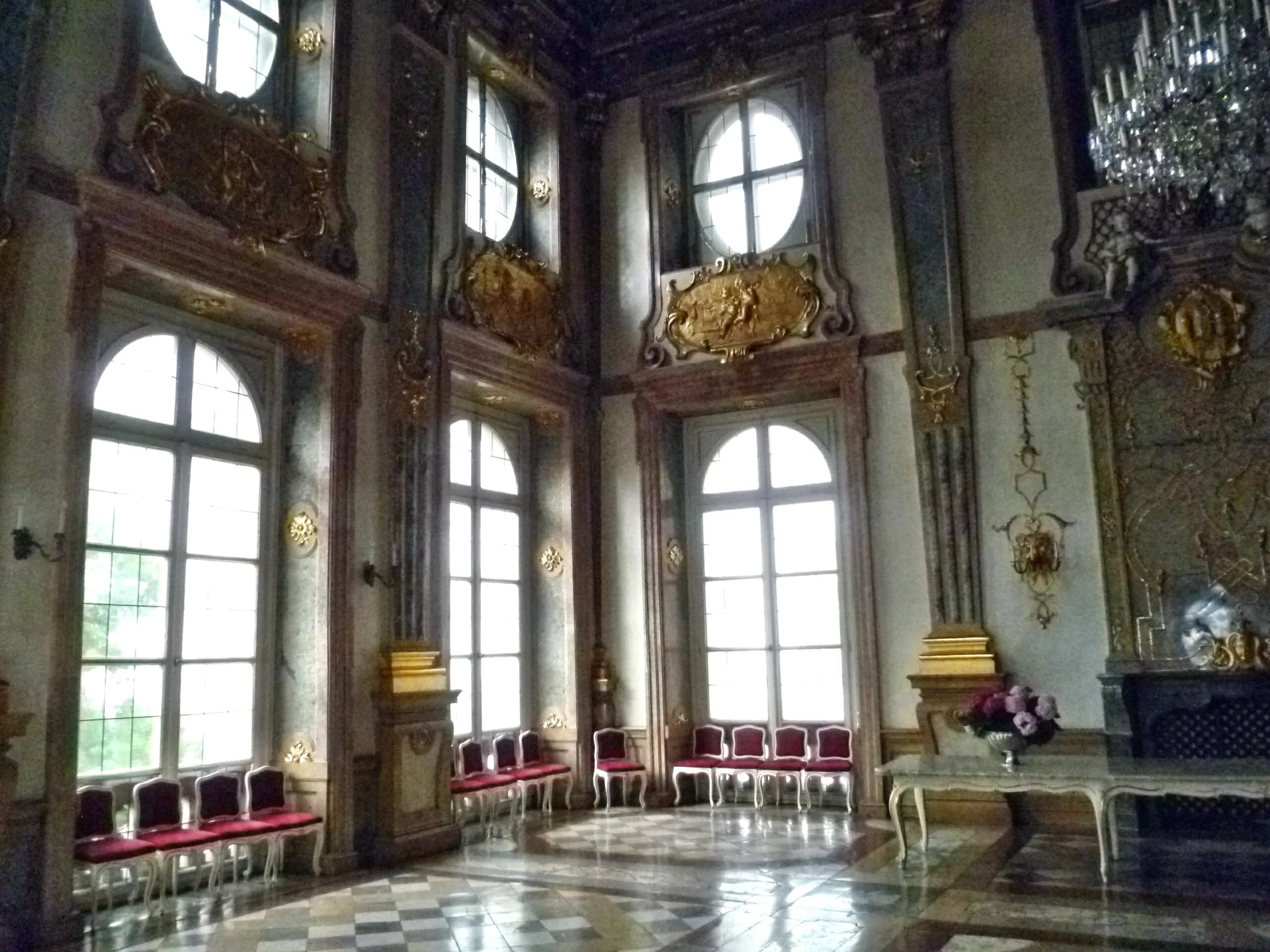
The Marble Hall you sit in was shaped in the great Baroque rebuild of 1721–27 by Johann Lukas von Hildebrandt — the same architect who designed Vienna's Belvedere palace. Marble pillars, gilded stucco and a scatter of playful cherubs give it the register the concert societies rightly call one of the most beautiful concert halls in the world; the City of Salzburg still holds its most sought-after civil weddings here. When the great city fire of 1818 gutted much of the palace, this hall came through, and it remains one of the finest surviving Salzburg Baroque interiors.
Small room, close sound, seventy years of it
Regular concerts have run in the Marble Hall since 1954 — seventy unbroken years of chamber music in the same room. Because the hall is small, perhaps 130 seats, there is no bad seat and no distance: you hear a string quartet the way it was meant to be heard, close, un-amplified, every phrase and breath audible. Visitors who would not call themselves classical fans regularly come out rating the night among the best of their trip, precisely because of that intimacy.
The evening, step by step
A concert at Mirabell is a whole evening, not just ninety minutes of music. This is how the night tends to unfold — and why arriving early is worth it.
- Before, 7 pm
Through the Mirabell Gardens
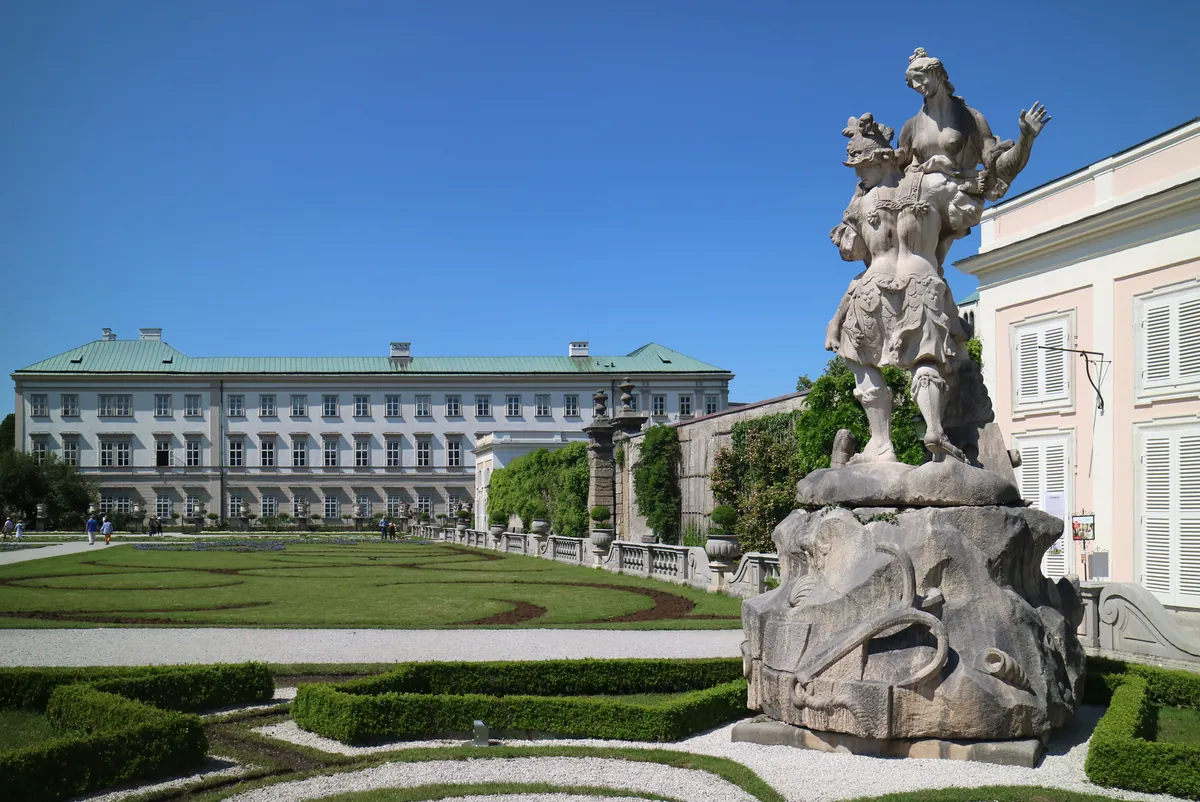
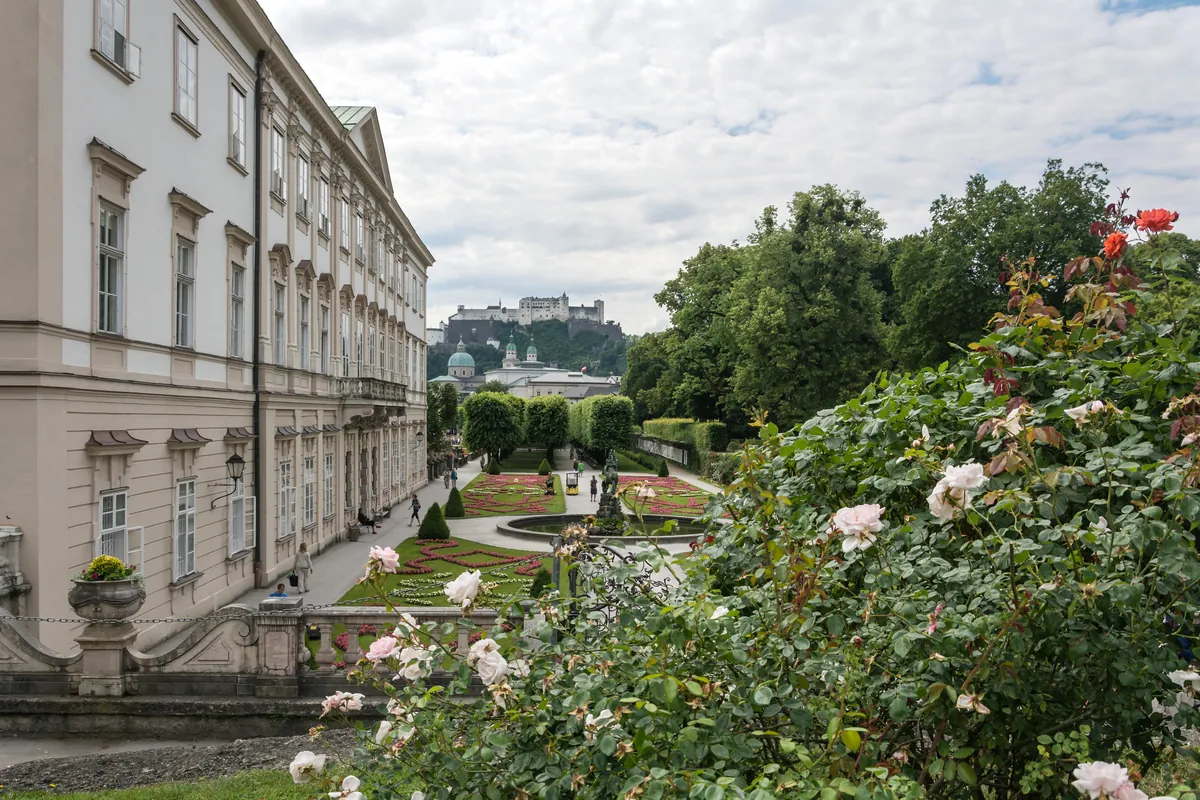
Come early and walk in through the free Baroque gardens — the same gardens the von Trapp children dance through in the Sound of Music. The Pegasus fountain and the wide 'Do-Re-Mi' steps are right there, lit and quiet in the evening, before you turn toward the palace and the concert.
- The stairs
Up the Angel Staircase
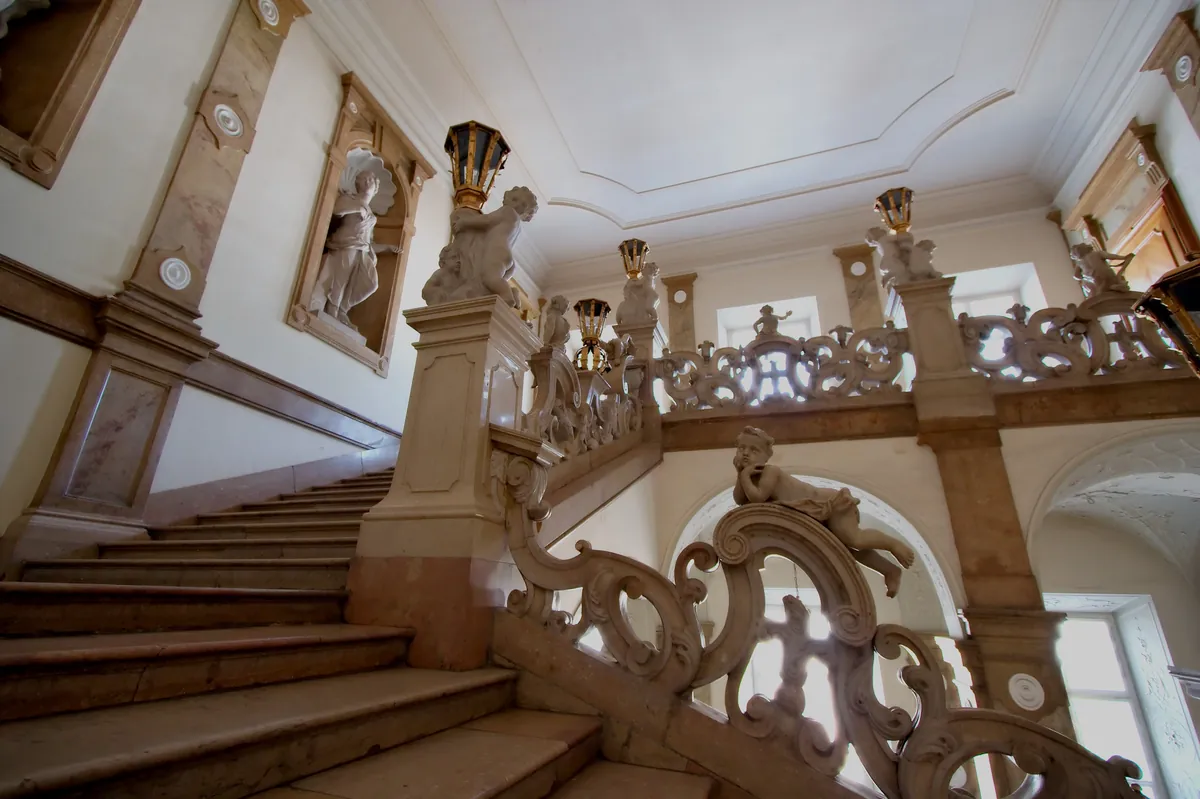
You reach the hall by climbing the Donnerstiege, the marble 'Angel Staircase' sculpted around 1726 by Georg Raphael Donner and crawling with chubby stone cherubs. The Sound of Music children ran down these very steps; you go up them, past the putti, to the first floor.
- 8 pm
Into the Marble Hall
Doors open about half an hour before; take your seat in the gilt-and-marble room. It is small enough that even the back row is close to the players. Photographs are welcome now, before the music — not once it begins.
- First half
Mozart, up close
A small chamber ensemble — typically strings with a wind or keyboard soloist — opens with around forty to fifty minutes of Mozart and his contemporaries, un-amplified in a room built for exactly this scale of music. You hear the instruments, not a sound system.
- Interval
A pause of about 15 minutes
A short interval breaks the concert in two. It is a moment to take in the hall itself — the marble, the gilding, the cherubs overhead — before the second half. Latecomers, if any, are only admitted at this point, so the music is never interrupted.
- By 10 pm
Out into the old town
The second half runs another thirty-five to forty minutes, and you are usually out by around ten — with the illuminated old town, the river and a late glass of wine a short flat walk away. A complete, unhurried Salzburg evening.
The Marble Hall
The Marble Hall
The hall is the reason to come. Here is what you are actually sitting in, and why it sounds the way it does.
A prince-archbishop's banqueting hall
Mirabell was built around 1606 by Prince-Archbishop Wolf Dietrich von Raitenau — originally, and scandalously, as a palace for his mistress Salome Alt and their children. The Marble Hall was its grand ceremonial and banqueting room, and it is where the court was entertained. Sitting for a concert here is sitting where Salzburg's rulers once dined and received guests.
Marble, gold and cherubs
The room rises through two storeys, lined with marble and finished in gilded stucco, with marble pillars and the playful angel and cherub statuary that give the palace its name for beauty. It is deliberately, richly Baroque — a setting that flatters the music and, frankly, the photographs you will take before the lights go down for the performance.
Small on purpose
Estimates vary — one venue listing gives 125 seated — but the hall holds only around 130 people. That is tiny for a concert venue, and it is the single most important thing to understand about the experience: the sound is close and un-amplified, the players are near, and the evening feels less like attending a concert than being at a private one.
Where the boy Mozart played
The provenance is genuine and specific. Leopold Mozart's prodigy children, Wolfgang and Nannerl, performed in this hall for the prince-archbishop; there is a documented occasion of the two of them playing two keyboards here, and Wolfgang's ceremonial university music was premiered in the room. Today's concerts put chamber music back where a Mozart once made it.
The music
The music you'll hear
Programmes change nightly, but the shape of the evening is consistent. Confirm the exact pieces for your date on the operator's calendar before you go.
Mozart at the centre
The series is built around Mozart's chamber music — the string quartets, quintets and divertimenti, and often the ever-popular Eine kleine Nachtmusik — the repertoire that suits a small marble hall better than any grand orchestra could.
Haydn and the classical circle
Around the Mozart sit the composers of his world and after it — Haydn above all, and pieces by the likes of Schubert and Saint-Saëns — a 'well-balanced programme of high quality', in the concert society's own words, rather than an hour of the same famous three tunes.
A chamber ensemble, not an orchestra
You hear a small resident ensemble — a string quartet or quintet, often with a wind or keyboard soloist — the scale of group these works were written for. In a 130-seat hall, that is exactly the sound the music was designed to make.
Two halves and an interval
The concert runs about an hour and forty minutes in two parts, split by a short interval — long enough to feel like a proper evening out, short enough to leave the old town's restaurants and bars still open when you finish.
Which Salzburg Mozart concert should you choose?
| Evening | What it is | Choose it when… |
|---|---|---|
| Mirabell concert (this) | A pure chamber concert, ~1h40, in the gilt Marble Hall Mozart played in; around €42–46 | You want the concert itself — the most beautiful room, real Mozart provenance, best sound for the money |
| Mozart Dinner Concert, St Peter | A three-course period dinner with costumed singers in Europe's oldest restaurant; ~3 hours, ~€75–105 | You want dinner and music as one whole evening's entertainment |
| Fortress (Hohensalzburg) concert | A chamber concert in the castle high above the city, funicular included; ~€50–55 | You want the view and the fortress to be the occasion as much as the music |
| Residence concert | A short Mozart piano-and-violin recital in the palace where he premiered his Violin Concerto K.219; ~45 min, from ~€27 | You want the cheapest, shortest Mozart taster, or you're travelling with children |
| Salzburg Marionette Theatre | A famous puppet staging of The Sound of Music or Mozart's Magic Flute | You have younger children, or want spectacle rather than a live concert |
Mirabell, in pictures
The Marble Hall, the Angel Staircase, the palace and the gardens you walk through to reach the concert.
Concerts at Mirabell Palace
Find your night at the Marble Hall
Every concert below is bookable through GetYourGuide, with live availability and the final price shown in your own currency before you pay.
Planning your night
Planning your night
Come early for the gardens
The concert starts at 8 pm, but the Mirabell Gardens are free and open late, so arrive by seven and walk the Sound of Music sights — the Pegasus fountain, the Do-Re-Mi steps, the Dwarf Garden — before climbing the Angel Staircase to the hall. It turns ninety minutes of music into a proper evening.
Smart casual is plenty
There is no strict dress code. Elegant attire is welcomed but not required; most attendees are travellers in nice-casual — a blazer and decent shoes, or a simple dress. Skip shorts and sleeveless tees and you are perfectly dressed.
Understand the seat categories
Tickets come in categories: the higher one gives you a reserved, numbered central seat in the front rows; the standard one is open seating within the section, so you choose your spot when you arrive. In a room this small, even open seating is close to the players — but if you want a guaranteed central seat, book the numbered category.
Getting there, and access
The hall is at Mirabellplatz, a flat ten-minute walk from both the old town and the main train station, and Mirabellplatz is a major bus hub. The Marble Hall is on the first floor and reachable by lift, so the stairs are optional. Doors open about half an hour before the 8 pm start.
Photos, children and booking flexibility
Photography is fine before the concert but not during it. Older, concert-ready children are welcome and there are reduced child tickets; for little ones, the Marionette Theatre or the 45-minute Residence concert is gentler. Booking through the listing gives free cancellation up to 24 hours before, so you can lock a night in and still adjust.
Planning an evening at Mirabell Palace
Which Salzburg Mozart Concert Should You Choose?
Mirabell, the St Peter dinner concert, the Fortress, the Residence recital and the Marionette Theatre — an honest guide to which of Salzburg's Mozart evenings is right for you.
Read more → THE MARBLE HALLDid Mozart Really Play at Mirabell? The Marble Hall's Story
A mistress's palace, a Belvedere architect, a great fire, and a prodigy at the keyboard — the true history of the room you sit in for the concert.
Read more → WHAT TO EXPECTA Night at the Schlosskonzerte Mirabell: What to Expect
Start time, dress, seating, the interval, photos and getting there — everything about the evening itself, so nothing surprises you.
Read more → THE WALK INMirabell Gardens & The Sound of Music: The Walk to Your Concert
The free Baroque gardens you pass through to reach the hall are one of the world's most-filmed movie sets — here's what to look for on the way in.
Read more → THE PROGRAMMEThe Music at Mirabell: Mozart, Haydn and What You'll Hear
What a chamber programme in the Marble Hall actually sounds like — the composers, the ensemble, and why this repertoire suits this room.
Read more → AROUND THE CONCERTSalzburg for Mozart Lovers: Building Your Days Around the Concert
Mozart's birthplace, the old town, the fortress and the Sound of Music sights — how to plan a Salzburg day or two with the Mirabell concert as its centrepiece.
Read more →Questions
Mirabell concert questions
Is the Mirabell Palace concert worth it?
For most visitors, yes — it is one of Salzburg's most highly rated evenings, at roughly 4.8 out of 5 across around 2,000 reviews on the booking listing. The draw is the room: a small, gilded Baroque hall of about 130 seats where the sound is close and un-amplified, and where the boy Mozart actually performed. Even people who don't consider themselves classical-music fans tend to rate the intimacy highly.
Did Mozart really play in this hall?
Yes. The Marble Hall was the ceremonial hall of Salzburg's prince-archbishops, and Leopold Mozart's prodigy children — Wolfgang and his sister Nannerl — performed here for the court, with a documented occasion of the two of them playing two keyboards in the room. Wolfgang's ceremonial university music was also premiered here. Today's concerts return chamber music to a room where a Mozart genuinely played.
How long is the concert and is there an interval?
About one hour and forty minutes, in two halves separated by a short interval of roughly fifteen minutes. Concerts start at 8 pm and usually finish by around 10 pm, which leaves time for a late dinner or a drink in the old town afterwards.
What's the dress code — do I need to dress up?
Smart casual is completely fine. Elegant evening attire is welcomed but not enforced, and most attendees are travellers in nice-casual clothes. A blazer with decent shoes, or a simple dress, is more than enough; just avoid shorts and sleeveless tees.
Do I get an assigned seat?
It depends on the ticket category. The higher category gives you a reserved, numbered seat in the central front rows; the standard category is open seating within the section, so you pick your place when you arrive. Because the hall holds only around 130 people, even open seating is close to the musicians.
How is this different from the Mozart Dinner Concert?
The Mozart Dinner Concert is a three-course period dinner with costumed singers, held at the St Peter Stiftskulinarium restaurant, and runs about three hours. The Mirabell concert is a pure chamber concert in the palace's Marble Hall — no meal, no costumes, just the music in the historic room. Choose the dinner concert for a full evening's entertainment, and Mirabell for the concert itself.
Do I need to book ahead, or can I just turn up?
There is an evening box office, but the hall is small and the concerts are popular, so peak nights — summer, festival season and around Christmas — can book up a month or more ahead. Reserving in advance is the safer choice, and booking through the listing gives you free cancellation up to 24 hours before if your plans change.
Still choosing your concert, or your night?
Leave your email and roughly when you're in Salzburg — we'll send a short rundown of how the Mirabell concerts and the city's other Mozart evenings compare, what a night in the Marble Hall is like, and how to plan it.